A common question arises in international design patent applications: Can trademarks or brand logos be included in the drawings? Many businesses and practitioners encounter this issue when preparing submissions for global design protection. This article provides a systematic analysis from four perspectives—legal framework, examination differences, practical cases, and operational recommendations—to help you navigate the examination process effectively.
I. The Fundamental Distinction Between Trademarks and Design Patents
First, it is essential to clarify that trademark rights and design patent rights are distinct forms of intellectual property.
· Trademarks protect brand identifiers used to distinguish the source of goods or services. They serve as the legal foundation for brand reputation and consumer recognition.
· Design patents protect the visual appearance of a product — its shape, ornamentation, or combination thereof — which is key to product differentiation and market competitiveness.
Simply placing a trademark in a design drawing does not confer design protection upon the trademark itself. The United States Patent and Trademark Office (USPTO) has explicitly stated that design patents and trademarks serve different legal purposes and may coexist without dependency on one another. Therefore, the reasonable use of a trademark in design drawings—purely as a visual element or identifier—is permissible.
II. Examination Differences Between China and the U.S.
Country / Region | Trademarks allowed in drawings | Need to indicate non-protected content? | Details |
China | Yes | Recommended to note | Patterns serving merely as logos are not protected by design patents. They can be excluded via dashed lines or stated in the description. In practice, many UI designs and packaging designs include brand text or logos, but the application will not be rejected during examination solely because of the trademark itself. |
United States | Yes | Recommended to clarify | The USPTO does not explicitly prohibit it, but it should be clarified in the specification which parts are protected by the design patent to avoid any misunderstanding that the trademark constitutes the protected design content. |
Most jurisdictions allow the inclusion of trademarks in design drawings. However, it is advisable to clearly indicate that the trademark is not part of the claimed design, so as to avoid office actions or opposition during prosecution and to improve the overall success rate of the application.
III. Practical Cases and Reference Standards
The USPTO Manual of Patent Examining Procedure (MPEP) provides specific formatting requirements for drawings that contain trademarks:
“The [1] forming part of the claimed design is a registered trademark of [2].”
Where [1] represents the trademark content and [2] represents the trademark owner.
Case 1
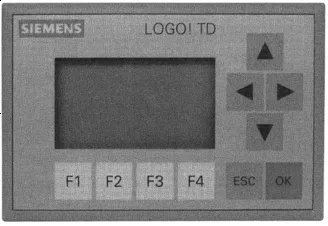
(U.S. Patent No. US-D607417-S)
The specification of this granted design explicitly states:
“The Siemens name plate forming part of the claimed design is a registered trademark of Siemens Corporation.”
Case 2
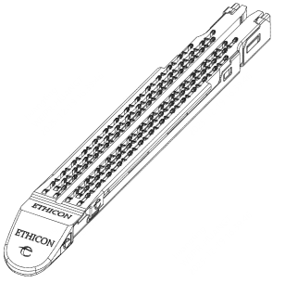
(U.S. Patent No. US-D950728-S)
The specification of this granted design includes the following declaration:
“The ETHICON forming part of the claimed design is a registered trademark of Johnson & Johnson Corporation.”
These cases demonstrate that the USPTO permits the inclusion of trademarks in drawings, provided that a clear statement is made in the specification. In practice, most granted design patents include a similar declaration indicating that the trademark is not part of the claimed subject matter. Where necessary, dashed lines or annotations are used to delineate the trademarked elements, ensuring a clear distinction between the trademark and the scope of design protection.
IV. Practical Recommendations for International Filings
Based on USPTO MPEG guidelines and prevailing practice, the following operational recommendations are suggested:
1. Use Dashed Lines to Indicate Trademark Elements
In the drawings, mark the trademark or brand logo with dashed lines or annotations to clearly indicate that these elements are not part of the claimed design. This helps examiners understand which elements fall within the scope of protection.
2. Include a Specification Declaration
In the design specification, include a statement such as: “The trademark/logo shown in the drawing is a registered trademark of [X] and does not constitute part of the claimed design.” This helps prevent examiner misjudgment and reduces the risk of office actions or objections.
3. Avoid Using Trademarks in the Title or Claims
In U.S. design patents, trademarks should not be used as the sole identifier in the title or claims. The title should describe the product’s ornamental appearance rather than the brand itself.
4. Understand Examination Practices in Key Jurisdictions
Familiarize yourself with the drawing requirements in target markets such as China, the United States, the European Union, Japan, and South Korea. This can reduce the number of office actions and improve examination efficiency. For example, the EU Registered Community Design (RCD) system accepts designs bearing decorative identifiers, but it is still advisable to exclude trademark elements from the claimed subject matter in the description.
V. Conclusion
Whether a trademark may be included in design drawings is not a simple “yes or no” question. Rather, it is a matter of clearly articulating the claimed design and properly excluding non-claimed elements. Through the use of dashed-line annotations, specification declarations, and proper titling, trademarks can be reasonably incorporated into drawings while ensuring that the design patent proceeds smoothly to allowance. Properly managing the relationship between trademark and design protection not only safeguards a product’s unique appearance but also allows for effective brand presentation—making it a practical cornerstone of successful international design filings.





















 鄂公网安备 42010402001546号